
The Great Fire of London is one of the most famous events in the history of London. In September 1666, a huge fire spread through the city and destroyed thousands of homes and many important buildings. Today, families can explore this history through a walking tour that follows the path of the fire. A Great Fire of London walking tour with kids is both educational and fun. As you walk through the old streets, children can see where the fire started and learn how the city changed after the disaster. Along the way, you can visit famous landmarks such as Monument to the Great Fire of London and St Paul’s Cathedral. Therefore, this family-friendly tour turns history into an exciting adventure for children and parents alike.
Where Did the Fire of London Begin?
The Great Fire of London 1666 began in a small bakery on Pudding Lane London in the early hours of 2 September 1666. The bakery belonged to Thomas Farriner (King’s baker), who worked and lived there with his family. During the night, a fire started inside the bakery. Soon after, the flames spread quickly through the nearby streets of the City of London.
At that time, many houses were built from 17th-century timber houses and had straw roofs, which made them highly flammable. In addition, the buildings stood very close together. Because of this, the London fire spread quickly from one street to another. A strong east wind made the situation even worse and pushed the flames across the city.
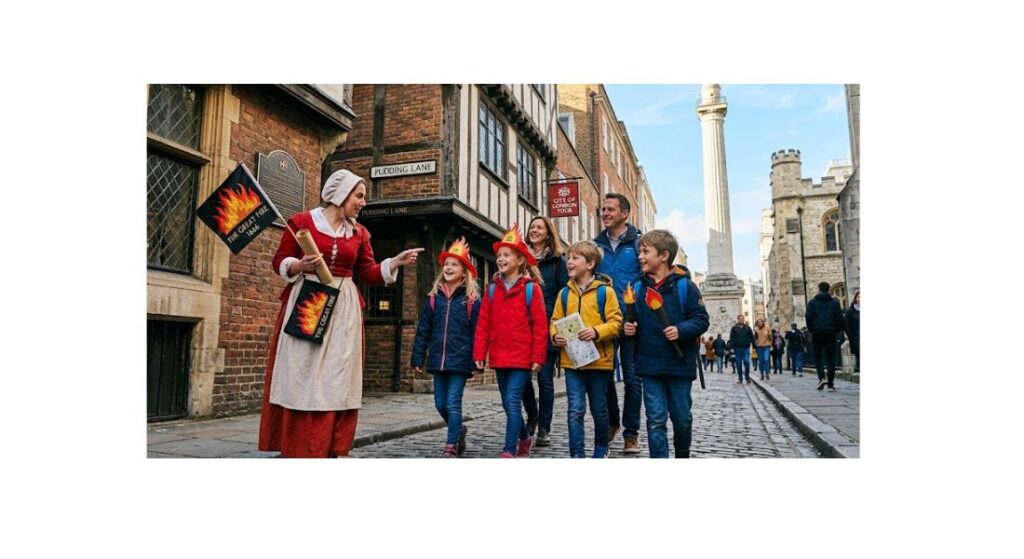
Today, visitors can still find Pudding Lane London marked with a plaque showing the exact location where the Great Fire started. Therefore, this historic street is often the first stop on a Great Fire of London walking tour and an important place for London history for kids to explore.
How Long Did the Fire of London Last?
The Great Fire of London 1666 lasted for four days, from 2 September to 5 September 1666. During this time, the fire spread rapidly across the City of London, destroying large parts of the city. Because many homes were built from 17th-century timber houses with wooden frames and straw roofs, the flames moved quickly from one street to another. In addition, a strong east wind pushed the fire further through the crowded streets.
As the fire continued, it caused massive destruction. In total, about 13,000 houses destroyed, 87 churches destroyed, and nearly 100,000 people left homeless. Many important buildings were damaged, including the old St Paul’s Cathedral, which later led to the St Paul’s Cathedral reconstruction designed by Sir Christopher Wren.
Eventually, the fire began to slow down when buildings were pulled down to create firebreaks and the wind weakened. Although the disaster ended after four days, the Great Fire of London history changed the city forever and led to major improvements in London building regulations and safer construction methods.
Fire, Fire Sculpture at Monument
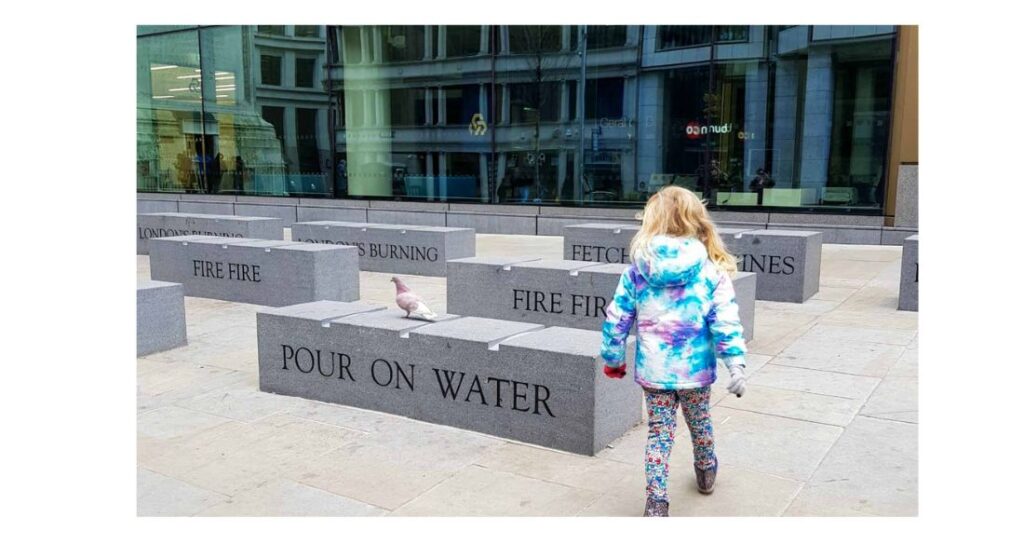
Near the Monument to the Great Fire of London, visitors can see a unique artwork called the “Fire, Fire” sculpture. This small public feature sits close to Pudding Lane London, the place where the Great Fire of London 1666 began. The sculpture includes concrete blocks with the famous London’s Burning nursery rhyme written on them.
The rhyme says: “London’s burning, London’s burning, fetch the engines, fetch the engines…” and many children learn it while studying the KS1 Great Fire of London school topic. Therefore, the sculpture connects history with childhood learning and makes the story easier for kids to understand.
Moreover, the sculpture provides a nice place to pause during a Great Fire of London walking tour. Families often stop here to take photos, rest for a moment, and talk about how the London fire spread quickly through the 17th-century timber houses of the City of London. Because of this, the “Fire, Fire” sculpture has become a small but meaningful stop on a family history walk in London.
Monument to the Great Fire of London
The Monument to the Great Fire of London is one of the most famous landmarks connected to the Great Fire of London 1666. This tall stone column stands close to Pudding Lane London, the place where the devastating fire began. It was designed by Sir Christopher Wren and Robert Hooke to remember the tragic event and the rebuilding of the City of London.
The Monument is 202 feet high, which is the same distance between the monument and the bakery where the fire started. Inside the column, visitors can climb 311 steps to reach the viewing platform at the top. From there, people can enjoy amazing views of the London skyline, including famous landmarks like The Shard, 30 St Mary Axe, and Tower Bridge.
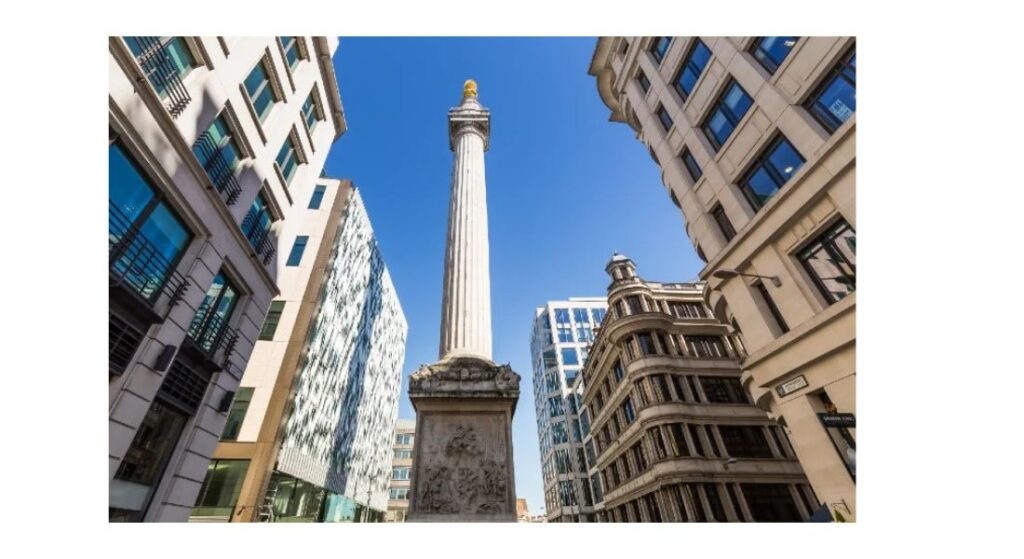
Today, climbing the Monument is a popular stop on a Great Fire of London walking tour. It helps visitors understand the history of the Great Fire, the destruction it caused, and how the city was rebuilt after the disaster.
Climbing Monument to Great Fire of London
Climbing the Monument to the Great Fire of London is one of the most exciting parts of a Great Fire of London walking tour. The monument was built to remember the Great Fire of London 1666 and stands close to Pudding Lane London, where the fire began.
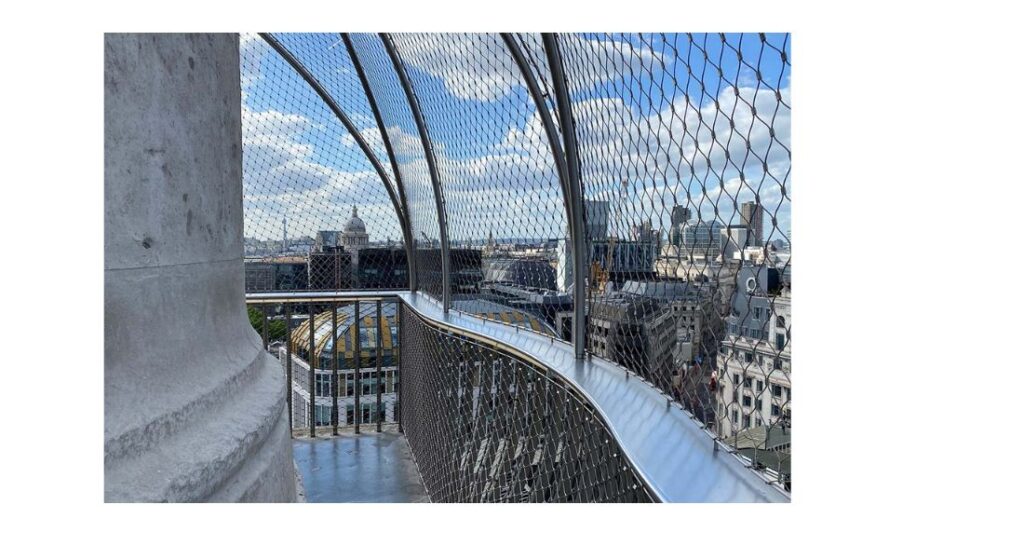
To reach the top, visitors must climb 311 narrow steps inside the column. Although the staircase can feel a little tight in places, many families enjoy the challenge. As a result, children often find it fun and exciting to reach the top of the monument.
When you arrive at the viewing platform, you can enjoy 360-degree views of London. From the top, visitors can see famous landmarks such as The Shard, 30 St Mary Axe, and Tower Bridge. Therefore, climbing the monument not only teaches visitors about the history of the Great Fire of London, but it also offers one of the best views of the City of London skyline.
What Else Can You See on a Monument?
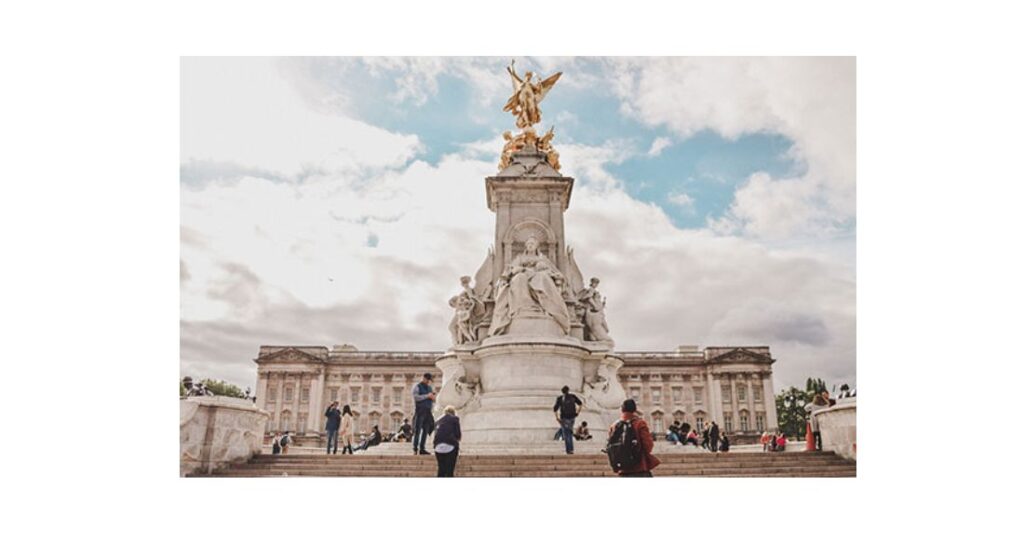
Besides climbing to the top of the Monument to the Great Fire of London, there are several interesting things to see around the base of the monument. One of the most impressive features is the bas-relief sculpture that shows scenes from the Great Fire of London 1666. This detailed artwork explains how the fire started and how the City of London was affected by the disaster.
The sculpture also shows important historical figures such as King Charles II and his brother King James, who helped organize efforts to stop the fire. In addition, there are Latin inscriptions on the monument that describe the history of the Great Fire of London and the rebuilding of the city afterward.
Interestingly, some words that once blamed Catholics for starting the fire were later removed in 1830. Today, visitors can read the inscriptions and learn more about the London fire destruction, the response of the king, and how the city recovered after the tragedy. Therefore, even without climbing the monument, visitors can still learn a lot about this important moment in London history.
Leadenhall Market
Leadenhall Market is one of the most beautiful and historic places to visit during a Great Fire of London walking tour. Located in the City of London, this market has a long history and is famous for its colorful roof, elegant architecture, and lively atmosphere.
In connection with the Great Fire of London 1666, part of the market area was damaged during the fire. However, some of its stone structures helped protect nearby buildings, which prevented the London fire from spreading further northeast. As a result, Leadenhall Market became an important location in the history of the Great Fire of London.
Today, the market is also well known as a Harry Potter filming location London. It was used as part of Diagon Alley in the movie Harry Potter and the Philosopher’s Stone. Because of this connection, many families include it in their London walking tour with kids. Visitors can explore the historic market, take photos, and enjoy shops and restaurants while learning more about London’s historic markets and the city’s past.
Guildhall
Guildhall is an important stop on a Great Fire of London walking tour in the City of London. Built in 1430, this historic building served as the headquarters of the city government. Interestingly, during the Great Fire of London 1666, many buildings around the area were destroyed, but Guildhall survived the disaster.
One reason it survived is that the building was constructed with strong stone walls, unlike many nearby 17th-century timber houses that easily caught fire. Because of this, Guildhall became one of the few medieval buildings in the City of London that remained standing after the London fire destruction.
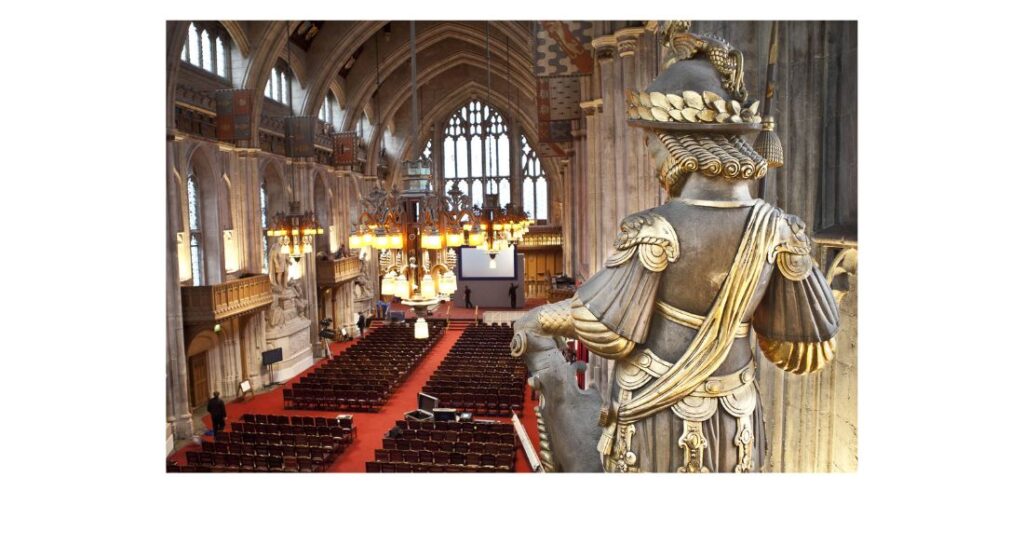
Today, visitors can explore the impressive Great Hall and art gallery inside the building. The gallery includes paintings and displays that explain the history of the Great Fire of London and how the city was rebuilt afterward. Therefore, Guildhall is not only a beautiful historic building but also an important place to learn about London’s past and medieval architecture.
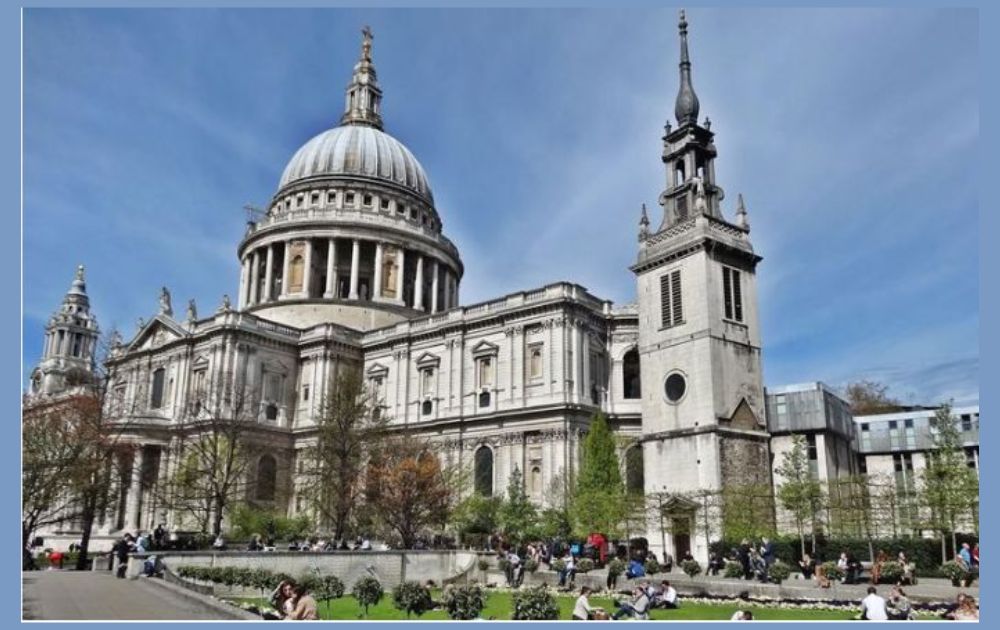
St Paul’s Cathedral
St Paul’s Cathedral is one of the most iconic landmarks to visit on a Great Fire of London walking tour. The original medieval cathedral was heavily damaged during the Great Fire of London 1666, as its wooden roof, scaffolding, and library caught fire. Fortunately, some parts of the foundation survived, allowing for a complete St Paul’s Cathedral reconstruction led by Sir Christopher Wren.
Today, the cathedral’s magnificent dome and architecture stand as a symbol of London’s resilience. Visitors can explore the interior, including the crypt, which displays the history of St Paul’s and the impact of the fire. Climbing to the top provides panoramic views of the City of London, offering perspective on how the Great Fire spread across the 17th-century timber houses and the surrounding streets.
Whether walking around the cathedral or climbing to the top, St Paul’s Cathedral London is both educational and inspiring for children and adults learning about London’s historic landmarks.
Visiting St Paul’s Cathedral
Visiting St Paul’s Cathedral is a must on any Great Fire of London walking tour. The cathedral, rebuilt by Sir Christopher Wren after the Great Fire of London 1666, offers both historical insight and stunning architecture for visitors of all ages.
Inside, you can explore the crypt, which features displays about the fire and the St Paul’s Cathedral reconstruction. There are also fascinating exhibits and paintings showing the London fire destruction and how the city recovered afterward. Families can learn about the KS1 Great Fire of London school topic in an engaging, hands-on way.
Tickets allow access to the cathedral for a year: £23 for adults, £10 for children aged 6–17, and free entry for under 5s. Climbing the dome rewards visitors with panoramic views of the City of London, including landmarks like The Shard, Tower Bridge, and The Gherkin. This makes visiting St Paul’s Cathedral London both educational and memorable for the whole family.

The River Thames
The River Thames London played an important role during the Great Fire of London 1666 and remains a key landmark on a Great Fire of London walking tour. In 1666, the river acted as a natural barrier that helped stop the fire from spreading to the South Bank. At the time, the only bridge across the river was London Bridge, which was packed with houses and made escaping the fire very difficult for many residents.
Today, walking along the River Thames lets visitors imagine the chaos of the fire and see the historic sites along its banks. You can spot landmarks such as Tower Bridge London, the Millennium Bridge, and the rebuilt St Paul’s Cathedral. For families and children learning about the KS1 Great Fire of London school topic, visiting the river helps bring the story of the fire to life.
The River Thames also offers scenic views and photo opportunities, making it a perfect addition to a self-guided London history walk. By exploring this area, visitors can connect the natural geography of London to the way the fire spread and understand the importance of rivers in London’s historic city planning.
The Great Fire of London Facts and Legacy
The Great Fire of London 1666 was a turning point in the history of the City of London. The fire lasted four days, destroying around 13,000 houses, 87 churches, and leaving nearly 100,000 people homeless. Despite the destruction, only a few deaths were officially recorded, although it is likely more went uncounted. The fire started at Pudding Lane London, in the bakery of Thomas Farriner (King’s baker), and quickly spread through the 17th-century timber houses due to dry conditions and a strong east wind.
The fire’s legacy changed London forever. It led to new building regulations, requiring houses to be made of brick instead of timber and built farther apart to reduce fire risk. The disaster also inspired the creation of home insurance and early private fire brigades. Interestingly, the fire helped eliminate rats carrying the Black Death, reducing the spread of disease in the city.
Today, the Great Fire of London history is remembered through landmarks such as the Monument to the Great Fire of London, St Paul’s Cathedral, and Guildhall, making it a meaningful and educational experience for families exploring London history with kids.
KS1 Great Fire of London
The KS1 Great Fire of London school topic is an important part of learning about London history for kids. Children in Key Stage 1 (ages 5–7) study how the Great Fire of London 1666 started at Pudding Lane London in the bakery of Thomas Farriner (King’s baker) and how it quickly spread through the 17th-century timber houses.
This topic also covers the destruction of 13,000 houses, 87 churches, and how almost 100,000 people were left homeless. Students learn about key figures such as King Charles II and Sir Christopher Wren, who helped rebuild the city, including St Paul’s Cathedral and the Monument to the Great Fire of London.
Teachers often use hands-on activities, such as making cardboard models of houses to illustrate how the fire spread, helping children understand the impact of the Great Fire in a fun and memorable way. Learning about this event gives children a strong foundation in London’s historic events while making history interactive and exciting.
Conclusion
Exploring the Great Fire of London 1666 through a family walking tour is both educational and fun. From Pudding Lane London, where the fire began, to the top of the Monument to the Great Fire of London with its stunning views of the City of London skyline, every stop helps children and adults understand the scale and impact of this historic event. Visiting landmarks like St Paul’s Cathedral, Leadenhall Market, Guildhall, and walking along the River Thames brings history to life. Families can see how London was rebuilt with stronger brick buildings, improved building regulations, and learn about the fire’s lasting legacy, making this tour a memorable experience for all ages.
FAQs
Q: Where did the Great Fire of London start?
A: It started at a bakery on Pudding Lane London, owned by Thomas Farriner (King’s baker).
Q: How long did the fire last?
A: The fire lasted four days, from 2–5 September 1666.
Q: How many buildings were destroyed?
A: Approximately 13,000 houses and 87 churches were destroyed.
Q: Can children visit the Monument?
A: Yes, children can climb the 311 steps inside the Monument to the Great Fire of London with adult supervision.
Q: What other historic sites are included in a walking tour?
A: Key sites include St Paul’s Cathedral, Leadenhall Market, Guildhall, and the River Thames, all linked to the fire and London’s history.
Q: Are there educational activities for kids?
A: Yes, children can learn through hands-on activities, explore plaques, read London’s Burning nursery rhyme, and connect with the KS1 Great Fire of London school topic.
Q: How did the Great Fire change London?
A: It led to brick building regulations, creation of home insurance, early private fire brigades, and safer urban planning.
If you liked this article about the Great Fire of London walk
You may also enjoy reading
What’s EasyJet Bag ‘Drop At Gatwick like?
A Dreamy Island Vacation: The Best Things To Do In Sardinia
Your Ultimate Scottsdale Travel Guide for a Perfect Arizona Trip